Pattern with application template - No 038


Sushi Pillow
What's Included
-
– Pattern with application template in A4, A3, A0 and US-Letter format
 PatternSchnittmuster (PDF) - DIN A4, DIN A3, DIN A0, US-Letter, Beamer-Datei5 FilesLayered fileProjector file
AppliquéApplikationsvorlage (PDF) - DIN A4, DIN A3, US-Letter, Beamer-Datei4 FilesLayered fileProjector file
PatternSchnittmuster (PDF) - DIN A4, DIN A3, DIN A0, US-Letter, Beamer-Datei5 FilesLayered fileProjector file
AppliquéApplikationsvorlage (PDF) - DIN A4, DIN A3, US-Letter, Beamer-Datei4 FilesLayered fileProjector file - – Detailed instructions with 4 illustrated steps
- – Complete materials and tools list
-
– 9 basics guides with tips and tricks
- • Why and How to Finish Fabric Edges
- • Which Interfacing or Non-woven Interlining is Best for Cushions?
- • Pen, Chalk, or Marker? How to Mark Fabric Properly
- • How to Transfer an Appliqué Template onto Fabric
- • When Should I Use Bondaweb or Stabilizer for Appliqué?
- • How to Properly Secure Appliqué Pieces
- • How to Sew an Appliqué Properly
- • Which Stitches and Settings Are Ideal for Appliqué?
- • How to Sew a Ladder Stitch
- – Multilingual support (DE/EN)
- – Everything in One Place
Required Materials
-

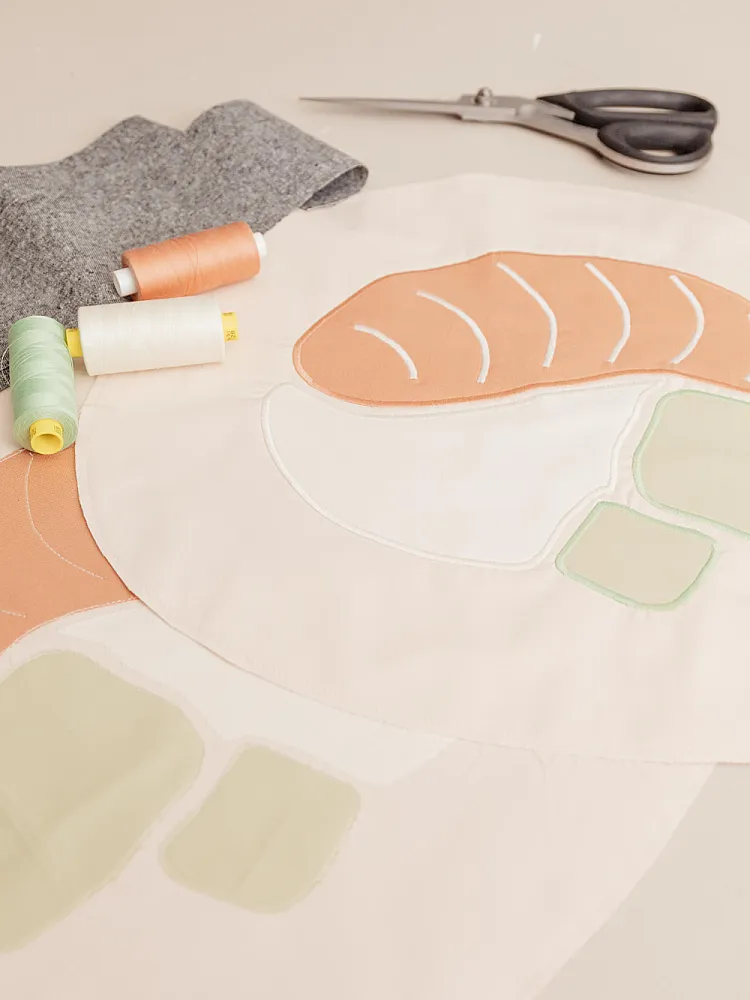
Fabric A: 90 x 40 cm
For the rice.
Soft, skin-friendly fabric with a pleasant texture. Suitable: Cotton fabrics, plush, or decorative fabrics.
-

Fabric B: 124 x 15 cm
For the nori.
Non-stretch fabric with a firm structure and a heathered appearance.
-

Fabric C: Fabric Scraps
For the salmon appliqué.
-

Fabric D: Fabric Scraps
For the avocado appliqué.
-

Stoff E: Stoffreste
Für die Frischkäse-Applikation.
-
Interfacing or Non-woven Interlining (optional):
If your fabric is too thin or the filling might show through, you can reinforce the pillow with non-woven interlining or fusible interfacing.
-
Vliesofix/Bondaweb (optional):
For securing the appliqué pieces.
-

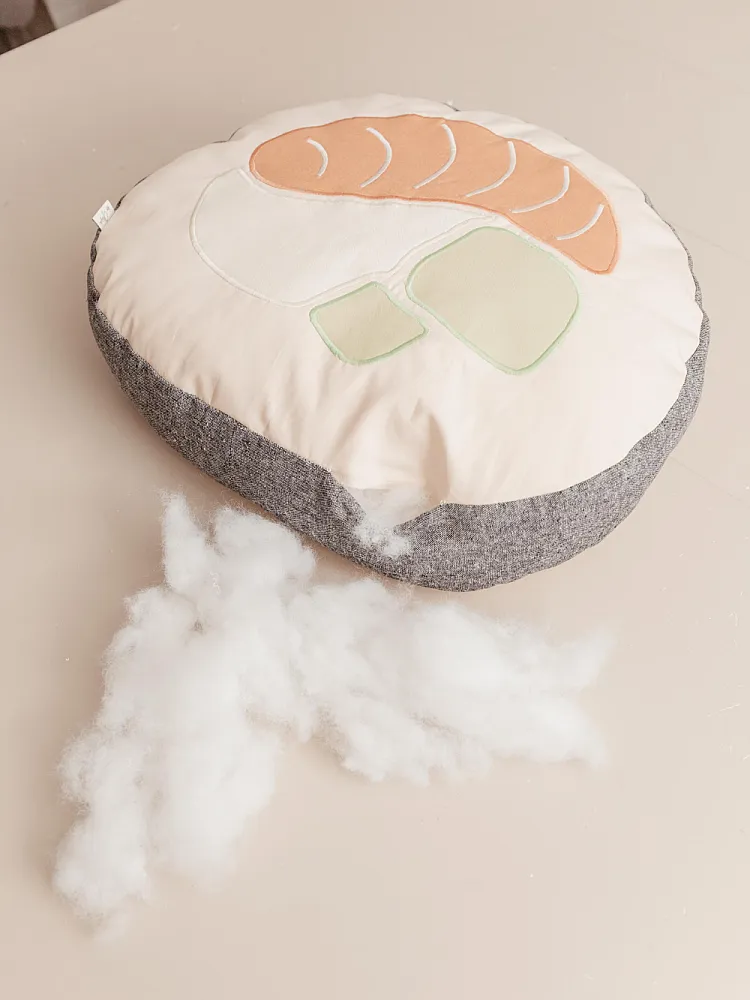
Stuffing: As needed To fill the pillow and help it maintain its shape. Alternatively, fabric scraps or other soft materials can be used.
-
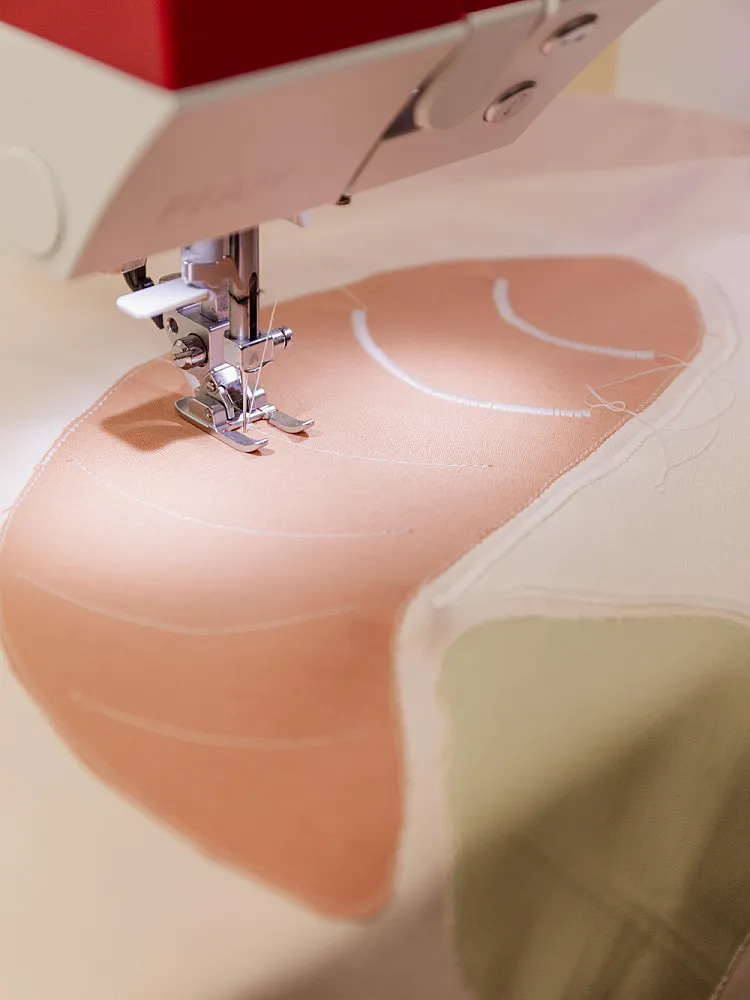
Embroidery Thread: Embroidery thread, size 40
For decorative stitching.
-

Sewing Thread: Universal sewing thread, thickness 120 Suitable for the recommended needle size NM 70–80.
Required Tools
-
Sewing Machine
-

Scissors - A large fabric scissors for cutting and a small thread snip for precise work.
-

Pins or Fabric Clips
-

Measuring Tool
-

Iron – For securing interfacing and appliqués.
-

Chalk or Marker – For transferring the appliqué template. Choose a removable marking tool such as tailor’s chalk or a fabric marker.
-

Needle – For closing the turning opening.
Description
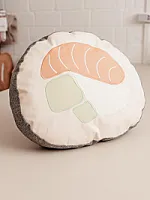
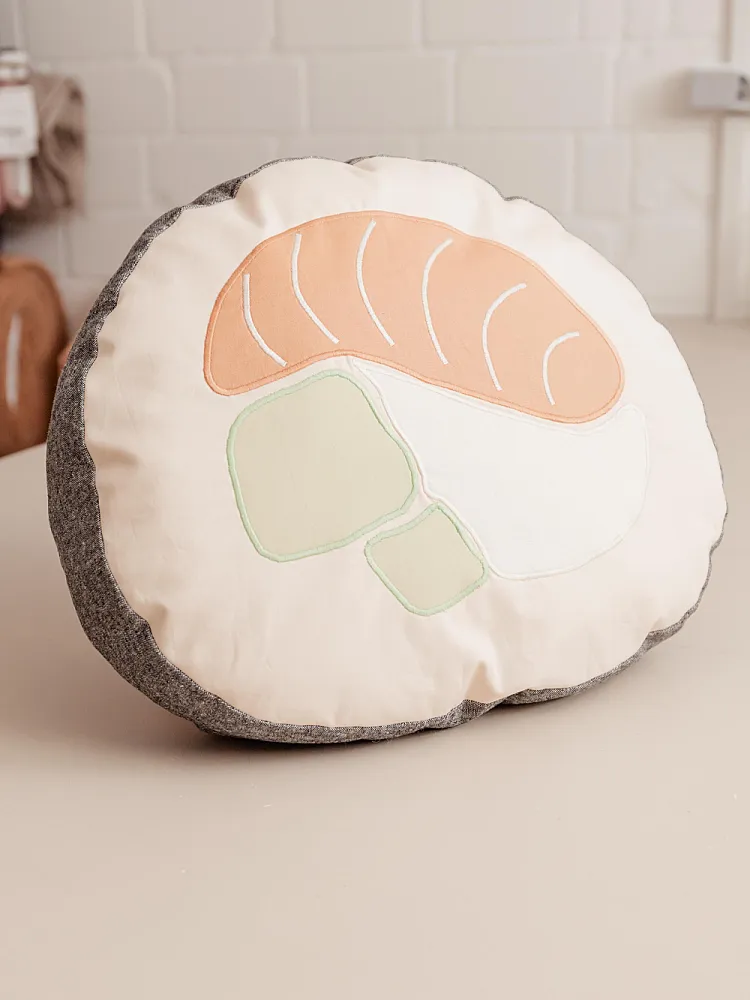
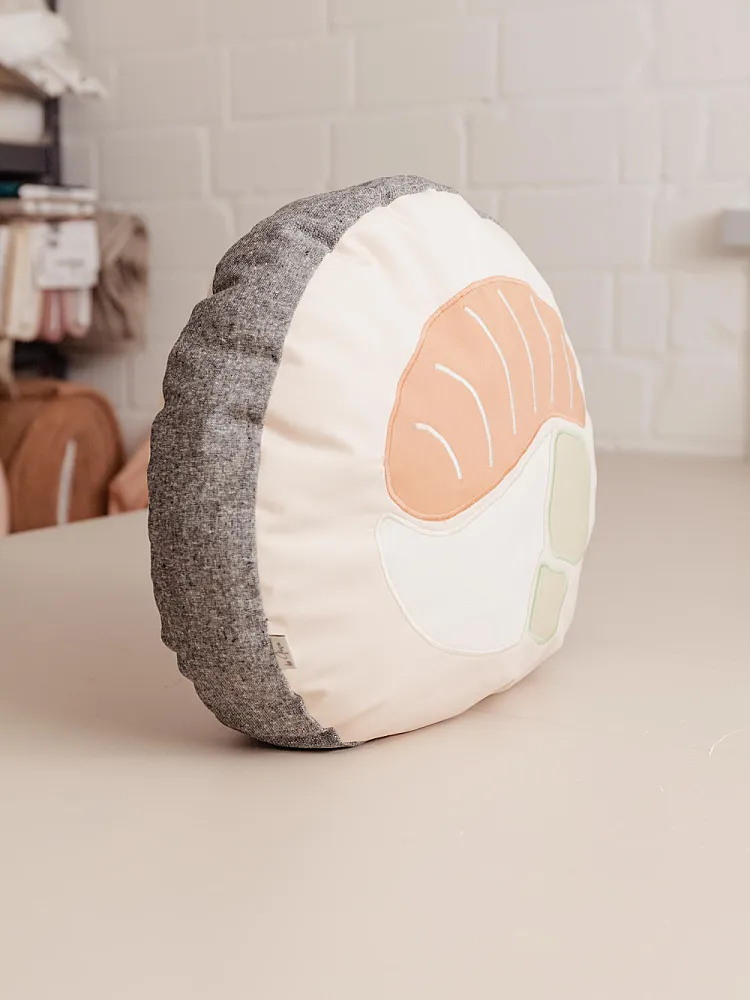
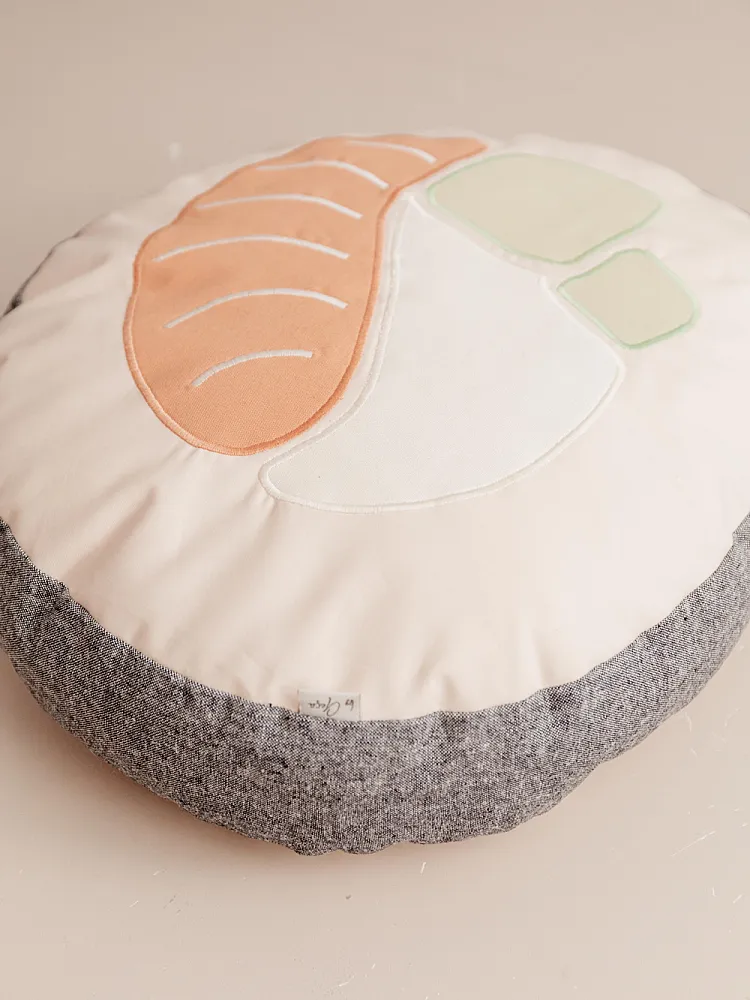
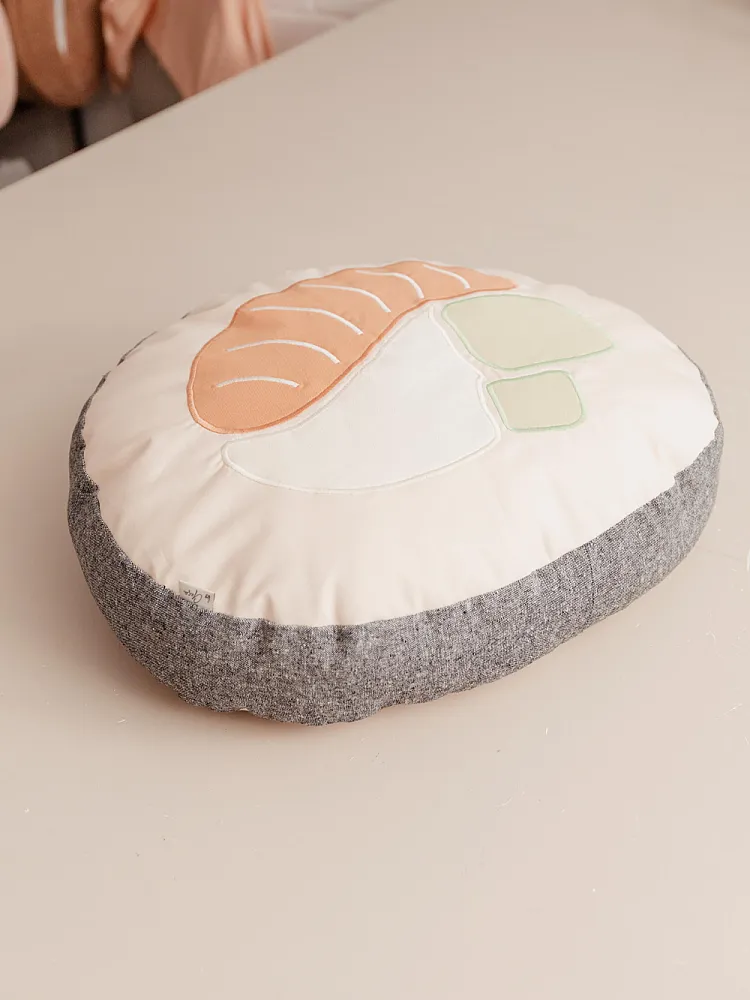
Sushi is one of my absolute favorite foods, and that is exactly where the idea for this pillow came from. The rounded shape works so well for a cozy decorative pillow, and with different fabrics and colors you can give your sushi a completely different look. Keep it classic with rice, nori, salmon, and avocado, or make it more playful with plush, teddy fabric, or special fabric scraps.
What makes the sushi pillow special are the appliqué details on both sides. They bring the design to life and make the pillow look like a little sushi roll from every angle. Basic appliqué skills are helpful, but the project stays manageable and is a lovely choice if you want to sew something creative with a fun effect.
You can use the pillow as sofa decor, a cuddle pillow, or even as a small yoga cushion. If you like, you can personalize it with embroidered sesame seeds, fluffy fabric for a fried roll look, or other handmade details. For the main shape, I recommend woven fabric or other non-stretch fabrics so the pillow keeps its shape nicely.
At a glance:
- Creative sushi pillow with appliqué details
- Suitable for woven and other non-stretch fabrics
- Lovely as decor, a cuddle pillow, or a small yoga cushion
- Great for fabric scraps and custom details
- Basic appliqué skills are helpful
Size: 40 x 35 x 7 cm
Pattern with application template - No 038
Sushi Pillow
What's Included
-
– Pattern with application template in A4, A3, A0 and US-Letter format
PatternSchnittmuster (PDF) - DIN A4, DIN A3, DIN A0, US-Letter, Beamer-Datei5 FilesLayered fileProjector file
AppliquéApplikationsvorlage (PDF) - DIN A4, DIN A3, US-Letter, Beamer-Datei4 FilesLayered fileProjector file
- – Detailed instructions with 4 illustrated steps
- – Complete materials and tools list
-
– 9 basics guides with tips and tricks
- - Why and How to Finish Fabric Edges
- - Which Interfacing or Non-woven Interlining is Best for Cushions?
- - Pen, Chalk, or Marker? How to Mark Fabric Properly
- - How to Transfer an Appliqué Template onto Fabric
- - When Should I Use Bondaweb or Stabilizer for Appliqué?
- - How to Properly Secure Appliqué Pieces
- - How to Sew an Appliqué Properly
- - Which Stitches and Settings Are Ideal for Appliqué?
- - How to Sew a Ladder Stitch
- – Multilingual support (DE/EN)
- – Everything in One Place
Reviews
Loading reviews...
No reviews yet
Be the first to review this pattern!
Related Products
Moon Pillow
 (8)
(8)
3,36 €

Star Pillow
(7)
3,36 €
Cloud Pillow
(2)
3,36 €

Fabric Rocket
(3)
5,89 €